
Social Bookmarking in 2025: What the Site Lists Get Wrong and What Actually Moves the Needle
Most articles about social bookmarking hand you a table of 200 platforms ranked by Domain Authority and call it a strategy. Follow that advice and you’ll either see no measurable impact or, worse, generate a link velocity pattern that trips Google’s spam filters. Neither outcome is what you’re after.
This article takes a different approach. We’re going to examine how social bookmarking actually functions inside Google’s current evaluation framework, where the conventional wisdom breaks down, and how a structured, engagement-first methodology produces results that mass submission never will. If you’ve already read three other guides on this topic and still aren’t seeing traction, the framework below explains exactly why — and what to do instead.
What Social Bookmarking Actually Is (And What It Isn’t)
Social bookmarking is the practice of saving, tagging, and sharing URLs on public platforms where other users can discover, vote on, and redistribute that content. Platforms like Reddit, Pinterest, Mix, Diigo, and niche communities like GrowthHackers all operate under this broad umbrella.
The persistent myth is that the act of submission alone confers SEO value. It doesn’t. Submission is just the entry point. What Google evaluates — and what drives actual referral traffic — is the engagement behavior that follows.
Here’s the distinction that almost every competitor guide misses entirely: Google indexing a link and Google valuing a link are two completely different outcomes. A bookmarked URL can be crawled and indexed into Google’s supplemental index within 24 hours and carry near-zero PageRank transfer. Fast indexing is not evidence of ranking value. It’s evidence that Googlebot visited the page. Those are not the same thing.
Why Domain Authority Tables Are the Wrong Lens
Open any competing article on this topic and you’ll find a table. The columns are predictable: platform name, Domain Authority, Page Authority, dofollow/nofollow status. The implicit argument is that higher DA equals more valuable submission target.
This framing has two serious problems.
First, Google’s own John Mueller has stated explicitly and on multiple occasions that Domain Authority is a third-party metric that Google does not use in its ranking systems. DA is a Moz-proprietary score. It approximates what Moz believes Google values, but it is not a direct input into Google’s algorithm. Treating it as a primary selection criterion for bookmarking targets is optimising for a proxy of a proxy.
Second, and more importantly, the DA framework ignores topical congruence — which is where Google’s Helpful Content System actually operates. A dofollow link from a DA 70 general bookmarking site, where your URL sits alongside content from completely unrelated industries, carries measurably less weight than a nofollow mention on a topically aligned community platform where your content is contextually relevant to the surrounding discussions.
Google’s systems evaluate the topical neighborhood of a linking page. A marketing agency post bookmarked on a marketing-focused Reddit community or a business growth platform like GrowthHackers sits inside a congruent topical cluster. That same post bookmarked on a generic aggregator alongside gardening tips and cooking recipes does not. The neighborhood matters as much as the address.
The Engagement Velocity Problem No One Talks About
Here is the mechanism that separates effective social bookmarking from wasted effort, and it’s essentially absent from every competitor guide on this topic.
Platforms like Reddit, Pinterest, and Digg are not passive link repositories. They run active ranking algorithms that determine whether a submission surfaces publicly to their user base or gets buried in low-visibility queues. A Reddit post with no upvotes within the first few hours sinks. A Pinterest pin with no saves or clicks gets deprioritised in interest-graph distribution. These aren’t edge cases — they’re the default outcome for low-effort submissions.
Now layer Google’s behavior on top of that. Google’s crawl budget allocation follows human activity signals on third-party platforms. When Googlebot evaluates how much crawl attention to allocate to a bookmarking platform, it follows engagement patterns. A submission that has attracted comments, upvotes, or saves signals that human users found it worth engaging with. A submission with zero interaction carries the opposite signal.
The practical consequence: a poorly executed submission can actively associate your URL with a low-engagement signal pattern, which is a worse outcome than not submitting at all. This is the risk embedded in the standard “submit everywhere” advice, and no site list article warns you about it.
The strategic counter-move is to seed initial engagement before submitting to competitive, high-visibility communities. This means:
- Building genuine participation history in a subreddit or community before submitting your own content
- Sharing the URL through owned channels first to generate initial traffic and on-page engagement metrics
- Ensuring the content itself is formatted to match the community’s consumption preferences before submission
This approach respects the platform algorithm and the human audience simultaneously — which is precisely what Google’s systems are designed to reward.
Social Bookmarking as an E-E-A-T Signal: The Framework Google’s Competitors Ignore
Every competitor article treats social bookmarking as a pure link-building exercise. That framing is incomplete to the point of being misleading in 2025.
When content is bookmarked, discussed, cited, and upvoted on authoritative community platforms — particularly Hacker News, relevant subreddits, or industry-specific communities — those interactions generate co-citation and co-occurrence signals that contribute to Google’s entity understanding of your brand and its authors. This is grounded in Google’s natural language processing patents around implied links, which document how Google processes brand and author mentions even without explicit hyperlinks.
E-E-A-T (Experience, Expertise, Authoritativeness, Trustworthiness) is not evaluated at the page level in isolation. Google’s Quality Rater Guidelines instruct evaluators to assess the reputation of both the website and the author as entities. When an author-attributed piece of content earns consistent community engagement across topically relevant platforms — with profile-consistent authorship and subject matter focus — those signals accumulate into a stronger entity profile for that author.
In practical terms: a marketing strategist who consistently contributes to r/SEO, r/digital_marketing, and GrowthHackers under their real name, and whose content reliably earns community engagement, is building demonstrable author authority that extends across their entire domain — not just the individual pages where their content appears.
This is the strategic use of social bookmarking that the list-focused articles never reach. For a broader look at how these signals fit into a complete search strategy, the article on SEO for lead generation covers how authority-building channels connect to pipeline outcomes.
The Link Velocity Risk Built Into Standard Advice
This point deserves direct attention because the standard advice in this space is not just incomplete — it carries genuine risk for sites that follow it at scale.
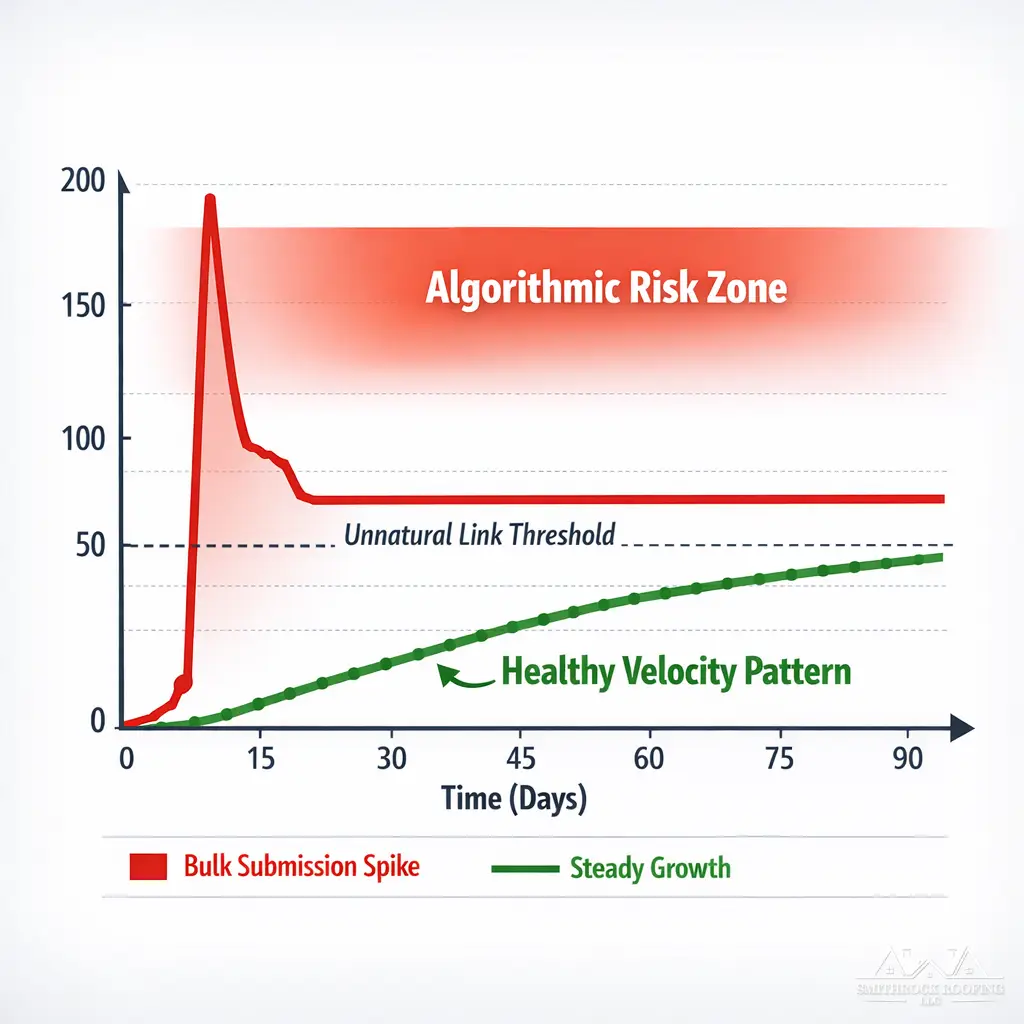
The typical competitor guide presents a list of 200 to 1,000+ bookmarking sites and implies that submitting to all of them is the correct approach. Any practitioner with real SEO experience recognises the problem immediately: submitting the same URL to hundreds of bookmarking sites within a short time window generates an unnatural link velocity pattern that Google’s spam detection systems are specifically designed to identify.
Unnatural link velocity — meaning a sudden spike in low-quality, topically irrelevant backlinks pointing to a page — is a documented negative ranking signal. The fact that the individual sites in question have high DA scores does not mitigate this risk. Google evaluates the pattern of link acquisition, not just the individual links. A page that accumulates 400 bookmarking site links in 48 hours looks algorithmically suspicious regardless of the DA of those sites.
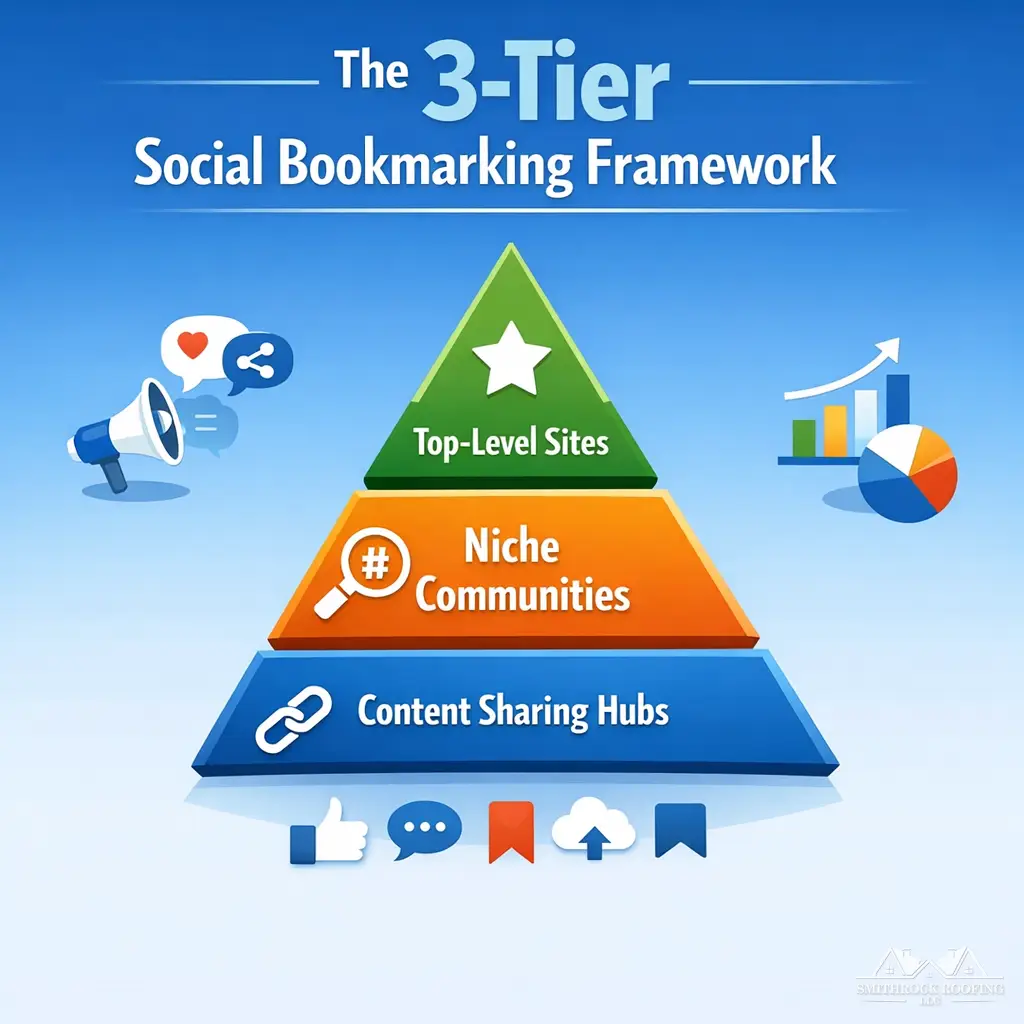
The practical guidance here is not to avoid bookmarking sites — it’s to treat link velocity as an active variable in your strategy:
- Tier your submissions over time rather than executing a single bulk run
- Prioritise platform quality and topical fit over submission volume
- Monitor your backlink profile in the weeks following a bookmarking campaign and watch for patterns that diverge from your site’s baseline link acquisition rate
Platform-Specific Strategy: Why Pinterest, Reddit, and Diigo Are Not Interchangeable
Placing Pinterest, Reddit, Diigo, and Mix in the same table with the same recommendation — “submit your URL here” — is the clearest indicator that a guide was written without platform-level operational knowledge. Each platform operates on a fundamentally different discovery mechanism, serves a different audience intent, and transfers link equity in different ways.
Here is how the primary platforms actually differ across the variables that matter to a real bookmarking strategy:
| Platform | Discovery Mechanism | Primary Audience Intent | Link Equity Profile | Engagement Window | Strategic Use Case |
|---|---|---|---|---|---|
| Community voting + subreddit algorithm | Discussion, research, community validation | Nofollow, but strong co-citation value | First 6–12 hours critical | E-E-A-T amplification, brand authority in niche communities | |
| Visual interest graph + keyword search | Inspiration, product discovery, how-to content | Dofollow on pin links | Extended shelf life (months) | Referral traffic, visual content indexation | |
| Hacker News | Community upvoting, time-decay algorithm | Tech, startup, product innovation audiences | Nofollow, very high co-citation value | First 2–4 hours critical | Authoritative brand signals, journalist/blogger exposure |
| Mix | Interest-graph curation | Content discovery across topics | Dofollow | Moderate (days to weeks) | Evergreen content distribution |
| Diigo | User tagging and group sharing | Research, education, professional reference | Nofollow | Low time sensitivity | Researcher and educator audience, co-citation accumulation |
| GrowthHackers | Community curation, marketing-specific | Growth strategy, marketing professionals | Nofollow | First 24 hours important | High topical congruence for marketing content, community authority |
| Magazine-style curation, interest topics | News consumption, topic-based reading | Nofollow | Moderate (days) | Brand visibility, secondary distribution for editorial content |
The strategic implication is straightforward: your platform selection should be driven by where your target audience actually exists and where your content format performs best — not by which platforms have the highest DA score in a table.
A B2B marketing agency publishing a technical SEO guide should prioritise Reddit’s marketing communities, GrowthHackers, and Hacker News. A home décor brand publishing a design guide should prioritise Pinterest above everything else. These are not equivalent tactics deployed to equivalent platforms. They are distinct channel strategies that happen to share the social bookmarking label.
Assessing Platform Viability Before You Invest
One final gap in the standard advice deserves attention: platform longevity. Several bookmarking sites that appear in competitor tables have either shut down entirely, pivoted their business model, or shed the majority of their active user base in the last three years. The article on Mixer Social Media and why Microsoft’s platform failed illustrates exactly how quickly an active platform community can collapse — and why platform viability deserves serious evaluation before you build a workflow around any channel.
Investing time in building a submission workflow around a platform with declining user activity is a compounding problem. Not only does the referral traffic potential drop as the user base shrinks, but the co-citation value of mentions on a platform that Google perceives as low-engagement is also declining. Platform viability should be assessed before any bookmarking site earns a consistent place in your workflow.
Evaluate platforms against these criteria before committing:
- Active user base: Does the platform show evidence of recent, real human activity — new submissions, comments, votes — or is it functionally static?
- Google crawl status: Use site:platform.com in Google Search to verify that the platform is being actively crawled and that recent submissions are being indexed
- Spam ratio: Is the platform moderating submissions or is it predominantly spam-filled content with no editorial standards?
- Traffic trend: Tools like Similarweb provide a directional view of platform traffic trends. A platform losing consistent traffic year-over-year is a declining asset
- Business model stability: Platforms operating without clear revenue models or with absentee ownership are higher-risk bets for long-term strategy
The platforms worth consistent investment are those with active, moderated communities where real engagement is occurring — because those are the platforms where Google is allocating crawl attention and where your content has a realistic chance of generating the engagement signals that make the submission worthwhile in the first place.
Final Strategic Recommendations for 2026
The bookmarking landscape will continue to consolidate around platforms that demonstrate genuine community engagement. Before that consolidation accelerates, three specific investments will position your strategy ahead of the curve.
1. Integrate Notion or a Dedicated Content Hub as Your Submission Command Center
The single biggest operational drag in most bookmarking workflows is the absence of a centralized system. Notion, used as a lightweight content operations hub, allows you to track which content has been submitted to which platforms, monitor engagement outcomes over time, and identify patterns in what performs. Without this layer, bookmarking becomes a scattered, unrepeatable activity rather than a compounding strategic asset. Build the tracking infrastructure first, then scale the submission activity around it.
2. Use Semrush or Ahrefs to Monitor Co-Citation and Referral Signal Outcomes
Bookmarking without measurement is essentially guesswork. Both Semrush and Ahrefs provide the backlink monitoring and traffic source reporting necessary to evaluate whether your bookmarking activity is producing the co-citation signals and referral traffic that justify ongoing effort. Set up regular backlink profile reviews and segment referral traffic by source in Google Analytics 4 to build an honest picture of which platforms are delivering value and which are consuming workflow time without return. If your technical SEO foundation has gaps that are suppressing the value of these efforts, the Small Business Technical SEO Audit guide covers the hidden site issues most commonly undermining ranking performance.
3. Prioritize Reddit and Pinterest as Primary Bookmarking-Adjacent Channels
Both platforms occupy a structurally unique position entering 2026. Reddit’s expanded integration with Google’s search results has made subreddit presence increasingly valuable for content visibility. Pinterest continues to function as a genuine discovery engine for visual and evergreen content categories. Neither platform behaves exactly like a traditional bookmarking site, but both deliver the core outcomes — indexed content, referral traffic, and audience engagement — that the best bookmarking platforms produce. Treating them as core channels rather than supplementary ones reflects where attention and indexation value are actually concentrating.
Frequently Asked Questions
What is social bookmarking and does it still matter for SEO in 2026?
Social bookmarking is the practice of saving, tagging, and sharing links to web content through publicly accessible platforms where other users can discover, vote on, and engage with those submissions. It still matters for SEO in 2026, but the mechanism has evolved. The direct link equity from bookmarking submissions is generally modest. The more meaningful contribution is co-citation — the pattern of your content appearing alongside relevant, authoritative sources across multiple platforms — and the referral traffic that active communities generate. Platforms with genuine human engagement also attract consistent Google crawl attention, which supports faster indexation of new content.
Which social bookmarking platforms are worth using in 2026?
The platforms worth consistent investment share a common characteristic: active, moderated communities where real human engagement is occurring. Reddit, Pinterest, Mix, and Flipboard each serve different content categories and audience behaviors, which means the right answer depends on your specific niche and content format. Visual content performs differently than long-form articles. News content behaves differently than evergreen resources. Platform selection should be driven by audience alignment and evidence of active crawl and indexation — not by inclusion in an outdated directory of bookmarking sites.
How many bookmarking sites should I submit to at once?
Submitting to a large volume of bookmarking platforms simultaneously, particularly lower-quality ones, carries more risk than benefit. A pattern of rapid, high-volume submissions to platforms with poor moderation and low engagement signals is consistent with manipulative link-building behavior, which search engines are well-equipped to identify. A more defensible and effective approach is to identify a smaller set of platforms with genuine community activity and build a consistent, quality-first submission practice around those. Depth of engagement on a few credible platforms outperforms broad shallow submissions across many marginal ones.
How do I measure whether social bookmarking is actually working?
Measurement requires connecting two separate data streams. First, monitor your backlink profile using a tool like Ahrefs or Semrush to track which bookmarking submissions are generating indexed links and co-citation signals. Second, review your referral traffic data in Google Analytics 4, segmented by source, to identify which platforms are driving actual visitor sessions and how those visitors behave once they arrive. A bookmarking channel that produces neither referral traffic nor indexed link signals within a reasonable timeframe is a strong candidate for removal from your workflow, regardless of how frequently it appears in competitor strategy guides.
Conclusion
Social bookmarking has never been a single tactic. At its weakest, it is a mechanical link-building exercise that produces diminishing returns. At its strongest, it is a deliberate content distribution strategy built around platforms where real audiences engage with relevant material — producing indexed links, referral traffic, and the kind of co-citation signals that contribute meaningfully to long-term search visibility.
The difference between those two outcomes comes down to the quality of your platform selection, the discipline of your submission practice, and the honesty of your measurement. Build a workflow grounded in those three principles and bookmarking becomes a sustainable channel rather than a checkbox.
For support developing a content distribution strategy tailored to your specific goals, Contact Us.