
Key Takeaways
- A web design agency that has built sites for businesses in your specific industry will understand your customers’ decision-making behavior and design accordingly, reducing the time it takes to convert a visitor into a lead.
- Portfolio quality matters less than portfolio relevance: an agency with ten sites built for businesses similar to yours is a stronger fit than one with a hundred sites across unrelated sectors.
- Small businesses in Dayton, Kettering, Beavercreek, and the surrounding Miami Valley area need an agency that understands local search intent, not just general web design principles, because a site that ranks nationally but not locally delivers little practical value.
- Ownership of your website files, domain, and hosting account should be confirmed in writing before you sign any agreement; agencies that retain control of these assets create dependency that is difficult and expensive to exit.
- The single most reliable predictor of a successful agency relationship is how clearly the agency explains its process before you become a client, not how impressive its sales presentation is.
Hiring the wrong web design agency costs small businesses far more than a bad-looking website. It costs time, momentum, and the opportunity to generate leads while a rebuild or legal dispute drags on. The most common failure pattern follows a predictable sequence: a business owner selects an agency based on a polished portfolio and a confident pitch, the project launches late and over-expectation, and within eighteen months the site is either underperforming on search or locked behind an agency’s proprietary platform with no clean exit. This article gives you the evaluation framework to avoid that outcome entirely.
Why Most Web Design Decisions Go Wrong Before the Contract Is Signed
The selection process breaks down at the very beginning because most small business owners are evaluating the wrong signals. Visual design quality, agency size, and name recognition are the factors that drive most hiring decisions. None of them reliably predict whether your site will generate leads, rank in local search, or remain yours to control after the relationship ends.
A visually impressive site that loads slowly, is built without semantic HTML structure, or uses a proprietary page builder that no other developer can edit is a liability, not an asset. An agency with a large client list may have built its reputation on enterprise-level work that shares nothing in common with what a local service business in Miamisburg or Centerville actually needs. If you want to understand what separates effective builds from underperforming ones, our article on web design services for small businesses that convert breaks down exactly what that difference looks like in practice.
The decision framework has to start with business outcomes, not aesthetics.
Define the Job Before You Evaluate Anyone
Before you contact a single agency, write down the specific problem your website needs to solve. This sounds obvious, but most business owners begin the process with a vague mandate: “we need a better website.” That framing gives an agency too much latitude and gives you no basis for measuring success.
Replace that framing with functional requirements:
- The site must generate inbound service inquiries from customers in Springboro, Huber Heights, and the surrounding service area.
- The site must load fully on a mobile device in under three seconds on a standard mobile connection.
- The site must be editable by our internal team without developer assistance for routine content updates.
- The site must integrate with our existing CRM and booking system.
When you walk into conversations with those requirements documented, every agency response becomes comparable. Vague promises become easy to spot because they cannot map to your specific list.
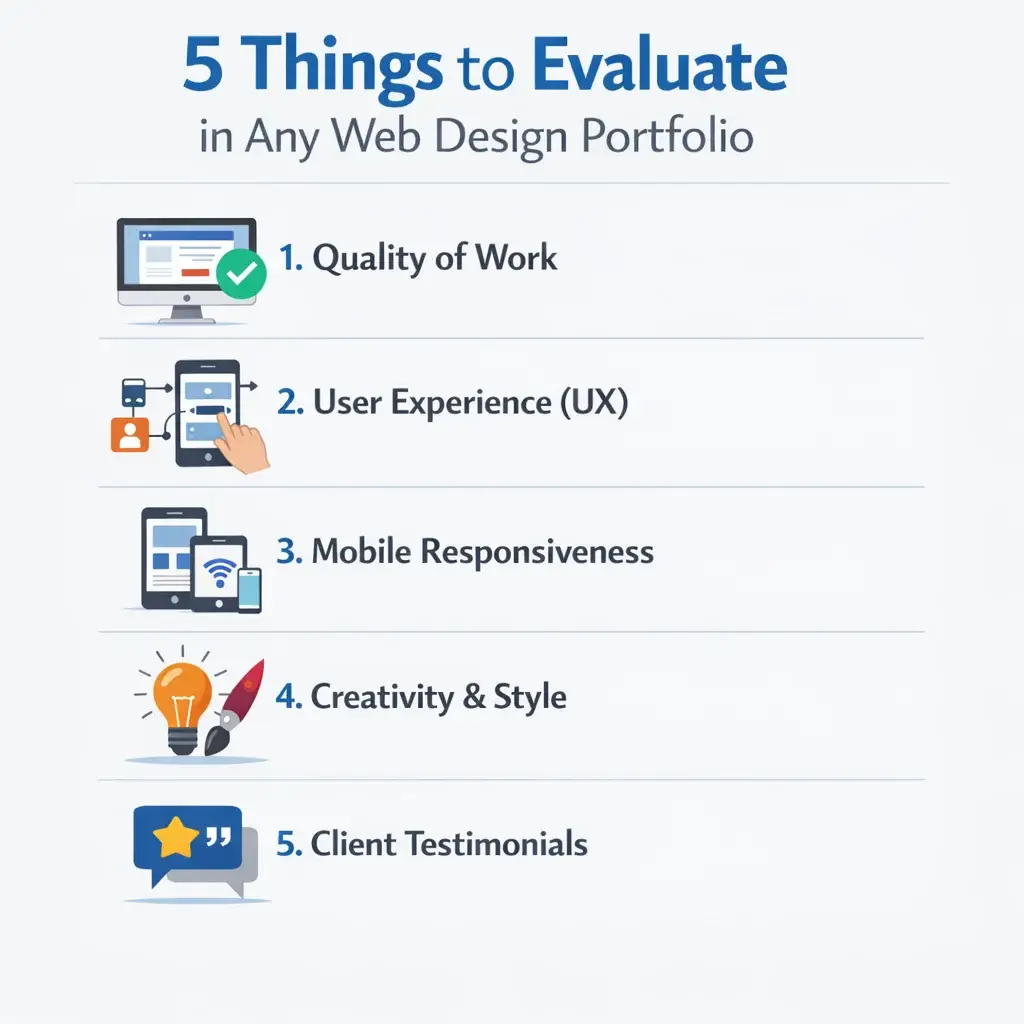
The Portfolio Review: What to Look For Beyond Visual Design
Every agency will show you their best work. Your job is to look past the surface and evaluate what the portfolio actually tells you about their capabilities.
Questions to Ask About Specific Portfolio Sites
Do not let the agency walk you through the portfolio uninterrupted. Ask these questions about each site they present:
- What were the measurable business results twelve months after launch?
- How long did the project take from signed contract to live site?
- Does that client still use you for ongoing work, and if not, why did the relationship end?
- Who owns the site files, hosting, and domain today?
An agency that cannot answer these questions confidently is either not tracking results or presenting sites that did not perform well enough to create ongoing relationships.
Need a hand with this in Dayton, Kettering and the Triad? Call (937) 848-0086 or request a free estimate. Honest answers, no pressure.
Technical Capability: The Questions That Reveal Real Expertise
Most agencies can discuss design. Fewer can have a detailed conversation about the technical decisions that determine whether your site performs in search and converts traffic into leads.
Use the table below as a structured evaluation tool across agencies you are considering.
| Evaluation Area | Question to Ask | What a Strong Answer Looks Like |
|---|---|---|
| Platform choice | Why are you recommending this CMS for my business? | Specific reasoning tied to your update frequency, team skill level, and SEO needs |
| Page speed | How do you approach Core Web Vitals in your builds? | Named techniques: image compression, lazy loading, caching strategy, CDN use |
| Local SEO integration | How do you structure location pages for multi-area service businesses? | Unique content per location, consistent NAP data, schema markup for local business |
| Mobile-first design | Do you design for mobile first or adapt from desktop? | Mobile-first with explicit explanation of how that changes layout decisions |
| Content editing | Can my team update pages without a developer after handoff? | Clear answer on which CMS, what training is provided, and what requires paid support |
| Hosting and ownership | Who holds the hosting account and domain registration? | Your name, your accounts, your credentials |
| Analytics setup | What tracking do you configure at launch? | GA4, Search Console, conversion event tracking, heatmapping if relevant |
If an agency deflects, gives vague answers, or treats these questions as an obstacle, that is the answer. Technical depth is not optional for a site that needs to compete in local search across the Dayton metro area. For a closer look at the platform decisions that affect long-term flexibility and performance, the article on WordPress for small businesses covers what agencies often leave out of that conversation.
Local Search Is a Different Discipline Than General Web Design
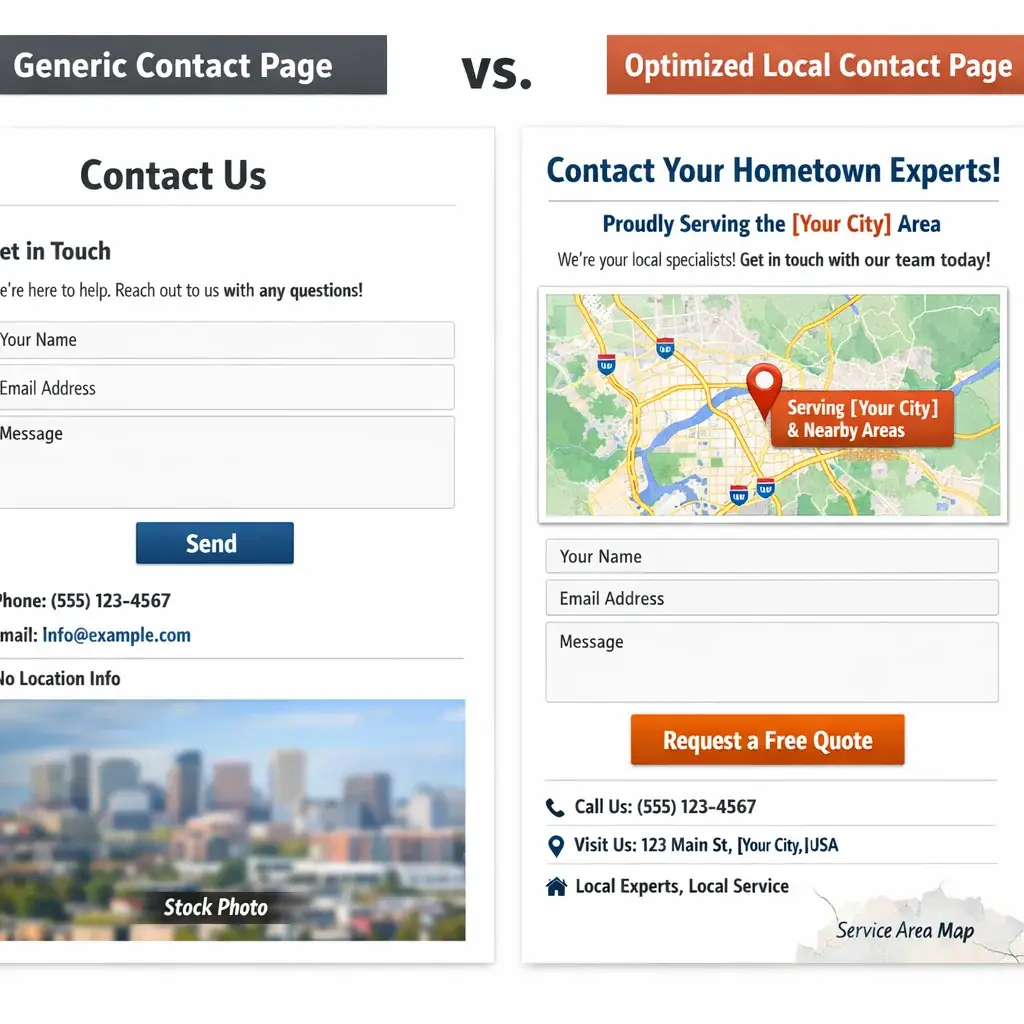
A site that looks excellent and loads fast will still underperform if it is not built with local search intent in mind. For small businesses serving Dayton, Kettering, Beavercreek, Centerville, Huber Heights, Miamisburg, Springboro, and surrounding communities, this distinction is the difference between a site that generates calls and one that generates compliments.
Local search optimization built into the design process includes:
- Location-specific landing pages with unique content for each service area, not duplicated city-name pages with swapped text
- Structured data markup that helps search engines understand your business type, location, hours, and service categories
- Google Business Profile alignment so that the information on your site matches your listing exactly, including address formatting and service descriptions
- Internal linking architecture that signals to search engines which geographic areas and services are most important to your business
- Page speed prioritization because mobile searchers looking for local services abandon slow sites within seconds
Ask any agency you evaluate whether they treat local SEO as a design consideration or a separate service added later. If it is the latter, you will likely pay twice for work that should have been integrated from the beginning.
Contracts, Ownership, and Exit Rights
This is the section most small business owners skip during the excitement of starting a new site. It is also where the most damaging problems originate.
Before you sign any agreement, confirm the following in writing:
- Domain registration: Your business name, your account, your login credentials. The agency may manage DNS settings, but the registrar account must belong to you.
- Hosting account: You should be able to transfer hosting at any time without the agency’s cooperation. If they insist on hosting your site on their servers without giving you account access, negotiate that term or walk away.
- Site files: Every file, database, theme, and plugin that constitutes your website should be deliverable to you at the end of the project and at any point thereafter.
- Intellectual property: Confirm that custom code, graphics, and copy created for your project transfer to you upon final payment.
- Maintenance dependency: If the agency builds on a proprietary system, get a direct answer on what happens to your site if you stop paying monthly fees or if the agency closes.
Partnership with a web design agency should be a choice you renew because the results justify it, not a situation you are locked into because the alternative is losing your site entirely.
The Right Agency Is a Growth Partner, Not a Vendor
The agencies that deliver lasting results for small businesses treat the relationship as ongoing. A new website is a starting point, not a finished product. Traffic patterns change, search algorithms update, and your business evolves. An agency worth hiring should be able to speak to how they support clients after launch: what they monitor, how they report results, and how they adapt the site as performance data comes in.
At Mongoose Digital Marketing, we work with small businesses across Dayton, Kettering, Beavercreek, Centerville, Huber Heights, Miamisburg, Springboro, and the broader Miami Valley area to build websites that are engineered for local visibility and lead generation from day one. If you are ready to have a direct conversation about what your site needs to perform, contact us for a free consultation and we will show you exactly how we approach it.
Frequently Asked Questions
How do I know if a web design agency has real experience with small businesses?
Ask to see examples of websites they have built for businesses similar to yours in size and industry. A strong agency will walk you through what those sites were designed to accomplish and share honest results from after launch. Generic portfolio links without context are a warning sign. What you want is an agency that can explain the thinking behind their work, not just show you how it looks.
What should I watch out for in a web design contract?
Pay close attention to ownership clauses, hosting terms, and what happens if you decide to part ways. You should own your domain, your site files, and any content created specifically for your project. If a contract is vague about those points, ask for clarification in writing before signing anything. Contracts that lock you into proprietary platforms or require the agency’s involvement to make basic changes deserve careful scrutiny.
How long does it typically take to build a small business website?
Timelines vary depending on the scope of the project, how quickly you can provide content, and how many revision rounds the process involves. A straightforward small business site generally takes several weeks from kickoff to launch. More complex projects with custom functionality, e-commerce, or large content libraries take longer. Any agency giving you a firm date before understanding your full requirements is estimating without enough information.
What should I expect after my website launches?
A website is not a one-time deliverable. After launch, it needs to be monitored for performance, kept updated for security, and refined as you learn how visitors are actually using it. Ask any agency you consider what their post-launch process looks like. Do they track rankings, traffic, and lead conversions? Do they flag issues proactively or wait for you to report them? The answer to those questions tells you a great deal about whether they see themselves as a long-term partner or a project shop.
Conclusion
Choosing the right web design agency is one of the more consequential decisions a small business owner can make, and working with a team that understands your local market makes a real difference. Mongoose Digital Marketing proudly serves Dayton, Kettering, Beavercreek, Centerville, and the surrounding Miami Valley area with websites built to generate leads and earn local visibility from the moment they go live. If you are ready to talk through what your business needs, call us at (937) 848-0086 or Contact Mongoose Digital Marketing, we are happy to start with a free consultation and go from there.