
Why Your Small Business Website Is Your Most Valuable Digital Asset in 2026
There’s a version of this conversation that was relevant in 2015. It went something like this: “Did you know customers search online before they buy? You need a website.” That argument did its job a decade ago. In 2026, it’s not just outdated — it’s actively underselling what a professional website does for your business.
The real case for having a professionally built website right now is fundamentally different from anything your competitors are reading on the topic. It’s about AI infrastructure, data ownership, and the architecture of trust. It’s about the difference between a digital presence that passively exists and one that actively works to generate leads, build authority, and protect everything you’ve built.
If you’re a small business owner who already has something online — a Wix template, a Facebook page, or a five-year-old site your nephew built — this article is written specifically for you. Because the gap between what you have and what a professional website delivers in 2026 is wider than it has ever been.
The Paradigm Shift: Your Website Is Now Your AI Citation Profile
Let’s start with the argument nobody else is making clearly enough.
Google’s zero-click search rate on mobile now exceeds 60%. AI Overviews, ChatGPT, Perplexity, and a growing ecosystem of AI-powered search tools are answering user questions directly — without sending traffic to websites in the traditional sense. If you’ve noticed your organic traffic changing, this is a significant reason why.
Most small business articles respond to this data by either ignoring it or catastrophizing. The correct response is neither.
The shift doesn’t make your website less important. It changes what your website needs to do.
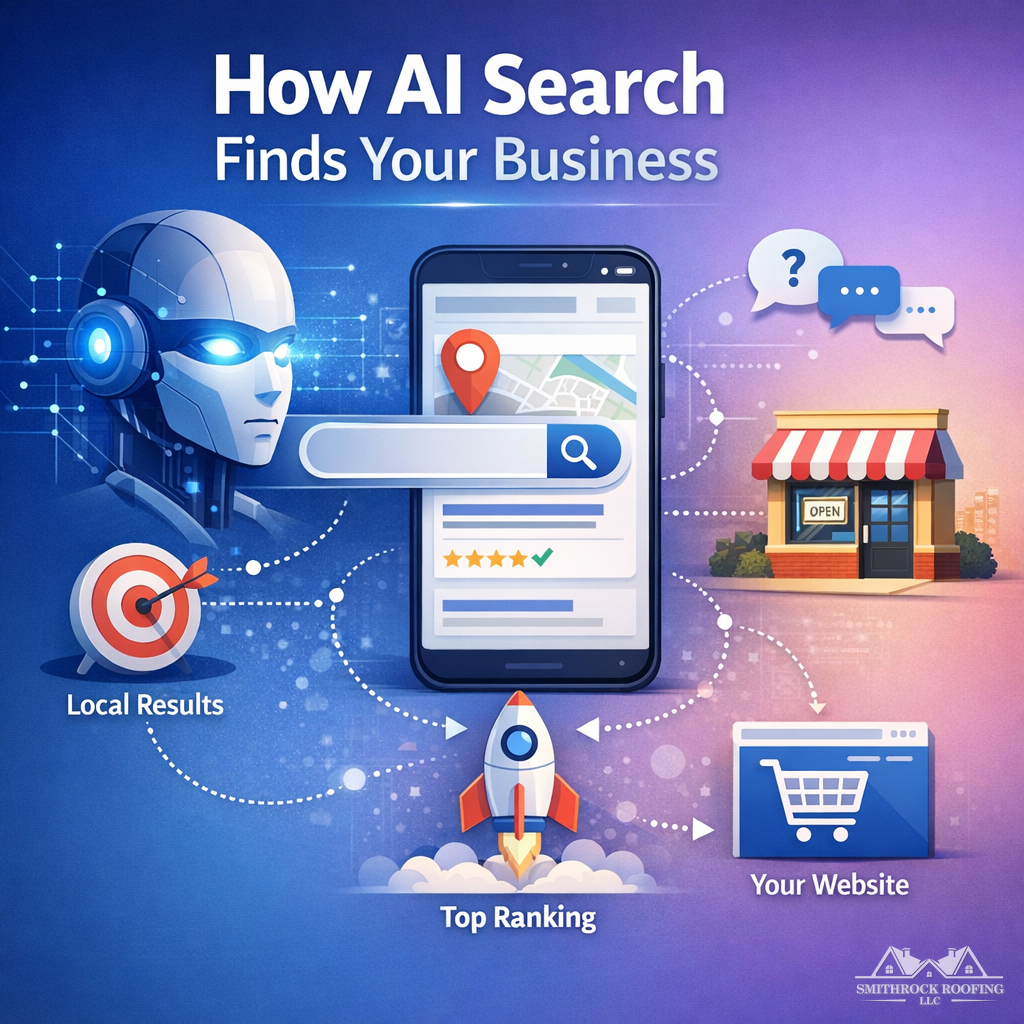
When a potential customer asks an AI assistant, “Who’s the best HVAC company in my area?” or “What accountant do small businesses in [city] recommend?” — the AI pulls its answer from structured, credible, crawlable data sources. It synthesizes information from business websites, review platforms, directories, and structured data markup to construct its recommendation.
If your website doesn’t contain the right technical signals, doesn’t demonstrate clear expertise, and doesn’t present consistent business information across the web — you don’t get recommended. You don’t even get considered.
Your professional website in 2026 is your credential file for AI systems. It’s how ChatGPT, Google’s AI, and every emerging AI discovery tool decides whether your business is worth mentioning when a motivated buyer is asking for exactly what you offer.
A DIY template with generic copy and no structured data doesn’t pass that threshold. A professional website, built with schema markup, original authority content, and technical precision, does.
The Rented Platform Problem Is More Serious Than You’ve Been Told
The advice to “own your digital presence instead of renting it from social media” has been circulating since 2012. Most small business owners have heard it. Far fewer have acted on it with the urgency it deserves — and the events of 2024 and 2025 have made that urgency concrete.
Consider what has happened across major platforms in recent years:
- Legislative action threatened to remove an entire social platform from app stores practically overnight, with businesses built entirely on that platform facing complete loss of their audience
- Algorithm changes across multiple major platforms have progressively reduced organic reach for business accounts, systematically pushing owners toward paid promotion to reach followers they already earned
- Policy updates have disrupted e-commerce integrations, forcing businesses to rebuild their sales processes with little warning
- Platform ownership changes have introduced instability and unpredictability into previously reliable channels
Here’s what makes these events genuinely damaging beyond the obvious visibility loss: when a platform changes or disappears, businesses don’t just lose followers. They lose years of accumulated behavioral data.
The engagement patterns, purchase history, audience segmentation, and retargeting pools that took years to build — none of it is exportable. None of it can be rebuilt quickly. A business that spent three years developing a finely tuned social audience has, in practical terms, zero transferable assets when that platform becomes unavailable.
A professional website with proper first-party data collection — email capture, behavioral analytics, CRM integration, and conversion tracking — builds assets that belong to you. Your email list doesn’t disappear because of an algorithm change. Your conversion data doesn’t evaporate when a platform gets acquired. Your customer behavioral data doesn’t get held hostage behind a policy update.
First-party data collected through your own website is the only truly durable digital asset a small business owns. In a post-cookie environment where third-party tracking is increasingly restricted, the value of owning that data has increased substantially. Businesses investing in professional websites today are building a strategic moat that becomes more valuable every year.
Why a Template Site Isn’t the Same Argument Anymore
This is the nuance most articles skip entirely, and it’s where a lot of small business owners are currently underestimating their competitive position.
The typical framing is: “No website vs. professional website.” That’s not the real decision most business owners face in 2026. The real decision is: “The Wix site I built in 2022 vs. a professionally developed website.”
These are not equivalent options, and the gap between them is not primarily aesthetic.
What Template Builders Actually Deliver
Website builders have genuinely improved. The visual output of a well-configured template can look credible. Page load times have gotten faster. Mobile responsiveness is mostly handled automatically. For certain use cases — a freelancer’s portfolio, an early-stage startup testing a concept — template builders serve a functional purpose.
What they do not deliver is conversion architecture.
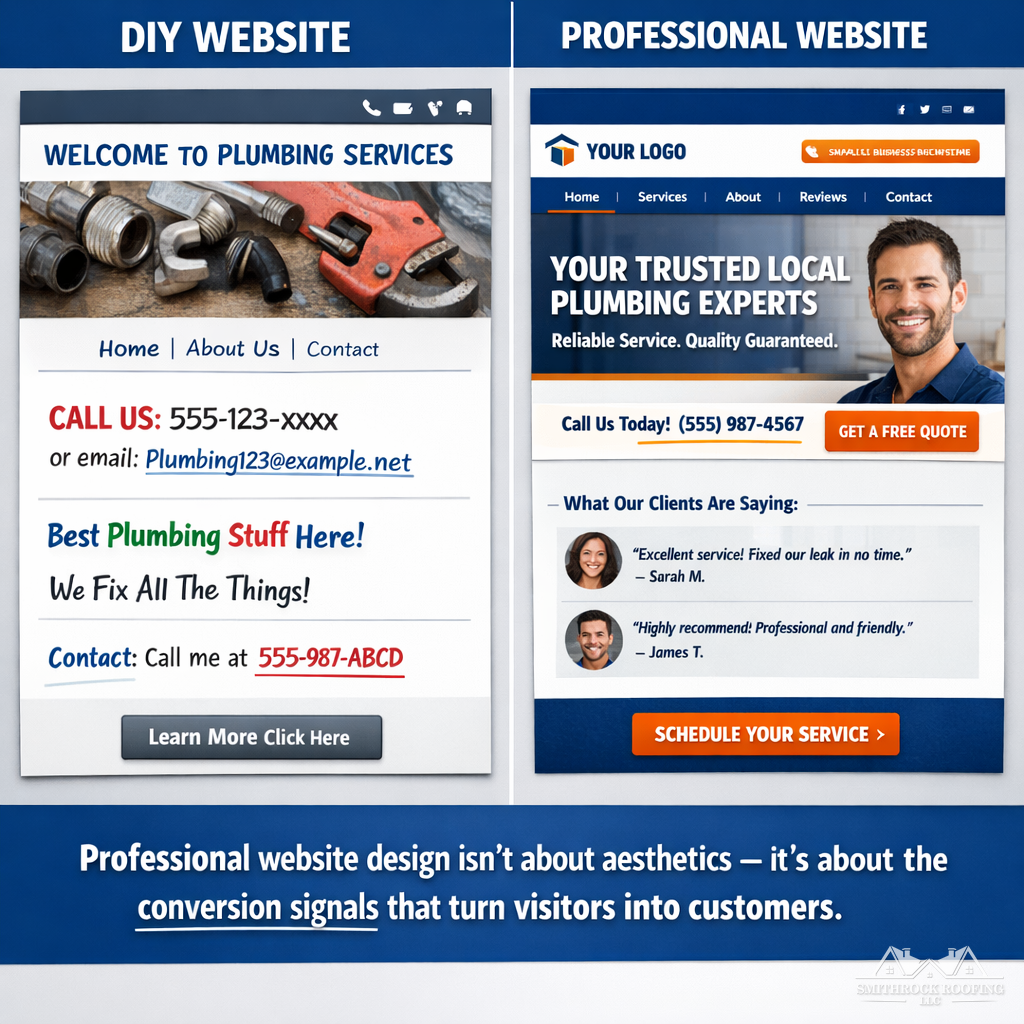
A professional website is not primarily designed to look good. It’s engineered to move visitors through a deliberate psychological journey — from initial awareness to trust to action. That involves:
- Strategic information hierarchy: What the visitor sees first, second, and third is a calculated decision based on where visitors are in the buying process
- Trust signal placement: Testimonials, credentials, case studies, and authority markers positioned at the exact points in the user journey where skepticism is highest
- Call-to-action engineering: Not just a button that says “Contact Us,” but a system of micro-commitments that progressively reduce the friction between interest and conversion
- Mobile user journey design: Mobile visitors and desktop visitors behave differently, have different intent patterns, and need different information hierarchies — a professional site accounts for this at the design stage
Template builders offer layout choices. Professional web developers deliver conversion systems.
The 2018 Website Problem
There’s a third category worth acknowledging: the professionally built website that’s now five to seven years old. Many small business owners feel protected because they invested in a proper website years ago. If that site hasn’t received consistent technical maintenance, content updates, and performance optimization, it may be actively working against you.
Google’s Core Web Vitals standards, introduced and progressively weighted since 2021, evaluate page speed, visual stability, and interactivity. An older site that hasn’t been optimized against these benchmarks is being penalized in search rankings relative to newer competitors — regardless of how professional it looked when it launched.
Security vulnerabilities accumulate in unmaintained sites. Outdated plugins and frameworks create exploitable gaps. SSL configurations expire or weaken. These aren’t hypothetical risks — they’re the predictable consequences of treating a website as a one-time asset rather than a living business tool.
A professional website isn’t a purchase. It’s an ongoing investment in a system that requires stewardship to maintain its performance.
The Trust Stack: How Sophisticated Buyers Evaluate Your Business Before They Contact You
Whether your buyers are consumers or other businesses, the trust evaluation process has become more systematic and less forgiving. Understanding the layers of that process helps explain why professional website investment isn’t optional for businesses serious about growth.
Layer 1: Existence Verification
Does the business have an indexed, live website? In 2026, the absence of a website doesn’t communicate simplicity or boutique positioning — it communicates risk. B2B buyers in particular treat a missing website as an automatic disqualifier before a conversation even begins.
Layer 2: Consistency Signals
AI tools and sophisticated search algorithms cross-reference your business information across your website, Google Business Profile, industry-specific directories, and social platforms. When your name, address, or phone number varies across these sources — even in minor ways — it registers as a trust inconsistency. This is an active ranking and recommendation penalty, not just a missed opportunity. Keeping that information accurate starts with your Google Business Profile optimization — a foundational step that directly affects how AI systems and search engines assess your credibility.
Layer 3: Authority Markers
Does your website demonstrate that you know what you’re doing? Not through claims (“We’re the best!”), but through evidence: published case studies, detailed service explanations that show process knowledge, original content that demonstrates thinking, and credentials that can be verified. These are the signals that differentiate businesses AI systems recommend from businesses they ignore.
Layer 4: Technical Trust Signals
Before a visitor reads a single word on your site, their browser and their device have already evaluated it. HTTPS encryption, load speed, mobile rendering quality, and accessibility compliance are assessed in milliseconds. A site that fails these technical benchmarks loses visitors before engagement begins — and loses ranking positions relative to competitors who pass them.
What the Data Actually Shows About Small Business Website Performance
The following comparison illustrates the measurable performance gap between professionally built websites and DIY or template alternatives across key performance indicators:
| Performance Dimension | DIY / Template Site | Professionally Built Site |
|---|---|---|
| Average page load speed | 4–7 seconds | Under 2.5 seconds (Core Web Vitals compliant) |
| Mobile conversion rate | Typically 30–50% lower than desktop | Optimized for mobile-first user journeys |
| Bounce rate | Often 65–80% for non-optimized sites | Typically 35–50% with proper UX architecture |
| Schema / structured data | Rarely implemented | Standard implementation for AI and search visibility |
| First-party data capture | Minimal or absent | Email capture, behavioral tracking, CRM integration |
| SEO technical foundation | Basic or template-limited | Full technical audit baseline, crawl optimization |
| Security maintenance | Dependent on user action | Managed, monitored, and updated systematically |
| Conversion architecture | Generic layout | User journey mapped with deliberate CTA engineering |
| AI citation readiness | Low — missing structured content signals | High — authority content and schema markup aligned |
| Long-term asset value | Depreciates without platform investment | Appreciates with ongoing content and technical stewardship |
The performance gap isn’t theoretical. It translates directly into the metrics that determine whether your digital investment generates returns: leads generated, conversion rates achieved, search positions held, and customers acquired.
The Conversion Architecture Argument: Why “Professional” Means More Than “Attractive”
This distinction deserves its own direct treatment because it’s the source of the most costly misconception small business owners hold about website investment.
A professional website is not a more attractive version of what you already have. It is a different class of business tool.
When Mongoose Digital Marketing builds a website for a client, the design process begins with questions that have nothing to do with aesthetics: Who is your highest-value customer? What objections do they typically raise before committing? Where in their decision process do they visit your website — are they in early research mode or ready to buy? What single action do you most need them to take?
The answers to those questions determine every structural decision: the page layout, the navigation architecture, the placement of testimonials, the specific language used in calls to action, and the information sequenced on the homepage.
Visual design follows strategy — not the other way around.
This is precisely what a drag-and-drop template cannot replicate. Not because the tools aren’t capable of producing attractive pages, but because the strategic layer — the conversion architecture that determines whether a visitor becomes a lead — requires human expertise applied to your specific audience, your specific competitive landscape, and your specific business goals. Our web design and SEO services for small businesses are built around exactly this principle: strategy first, design second.
The Maintenance Reality: Websites That Aren’t Maintained Are Liabilities
The conversation about professional website investment is incomplete without addressing what happens after launch.
A professionally built website, left unmaintained for 18 months, will:
- Lose search positioning as Core Web Vitals degrade and content freshness signals weaken
- Accumulate security vulnerabilities as plugins, frameworks, and CMS platforms receive updates that don’t get applied
- Drift out of consistency as business information updates on other platforms but not on the site itself, creating the trust inconsistencies discussed earlier
- Fall behind technical standards as browser requirements, accessibility guidelines, and mobile performance benchmarks evolve
For small businesses, this means the question isn’t only “Should I invest in a professional website?” — it’s “Am I committed to treating that website as an active business asset that requires ongoing attention?”
The businesses generating the strongest returns from their digital presence in 2026 are those that approach their website the same way they approach their physical storefront: something that represents the business, requires upkeep, and directly influences whether customers walk through the door.
The good news is that professional stewardship doesn’t require constant intervention. A well-structured maintenance relationship with a digital partner — covering security monitoring, performance optimization, content updates, and technical health — keeps a site performing at the level it was built to achieve. That ongoing relationship is the difference between a website that compounds in value and one that quietly becomes a liability.
Positioning Your Business for the Digital Landscape That Actually Exists
The small business owners winning online in 2026 aren’t the ones who simply have a website. They’re the ones whose websites are built to function as integrated business systems — pulling in qualified traffic, converting visitors into leads, feeding first-party data into their marketing strategy, and positioning them as the credible, recommended choice when AI tools answer a buyer’s question.
That outcome doesn’t happen by accident, and it doesn’t happen with a template.
It happens when a professional team builds your digital foundation with your specific audience, goals, and competitive context in mind — and continues to optimize that foundation as the landscape evolves.
If you’re evaluating where your current website stands against these benchmarks, that’s the right conversation to be having. Mongoose Digital Marketing offers a free consultation to assess your current digital presence and identify exactly where professional investment would generate the clearest returns for your business.
The gap between where you are and where you need to be is measurable. So are the results of closing it.
Strategic Recommendations for 2026
The following steps represent the highest-leverage actions a small business owner can take right now to close the gap between a passive online presence and a website that actively drives growth.
1. Commission a Professional Website Audit
Before investing in new development or marketing, understand exactly where your current site stands. A structured audit covering technical performance, mobile usability, Core Web Vitals, on-page SEO, and content quality gives you a clear baseline — and a prioritized roadmap. Tools like Google Search Console and PageSpeed Insights offer a starting point, but a professional review surfaces the issues those tools don’t contextualize or connect to business outcomes. For a deeper look at what those hidden issues often are, the article The Small Business Technical SEO Audit: 10 Hidden Website Issues That Are Killing Your Google Rankings is worth reading before you begin.
2. Invest in an AI-Optimized Content Strategy
The shift toward AI-generated search answers means your content needs to do more than rank — it needs to be structured, authoritative, and specific enough to be cited. Work with a digital partner to develop or restructure your core service pages, location content, and FAQ material so it aligns with how AI models pull and surface credible answers. This is no longer optional for businesses competing in searched categories.
3. Establish an Ongoing Maintenance and Optimization Relationship
A website built well in 2026 still requires active stewardship to hold its performance over time. Engage a digital partner who provides regular security updates, plugin and platform maintenance, performance monitoring, and periodic content refreshes. This relationship protects your initial investment and ensures your site continues compounding in value rather than degrading quietly in the background.
Frequently Asked Questions
Why isn’t a free website builder enough for a small business in 2026?
Free and template-based website builders give you a presence, but not a competitive one. They typically produce sites with limited technical flexibility, slower performance, minimal SEO capability, and no strategic structure tailored to your audience or market. In 2026, where AI tools, search algorithms, and consumer expectations are all more sophisticated, a generic site rarely performs well enough to generate meaningful leads or establish real credibility. A professionally built website is designed around your specific goals — and that specificity is what drives results.
How does a professional website help my business show up in AI search results?
AI-powered search tools — including Google’s AI Overviews and standalone platforms like ChatGPT and Perplexity — pull answers from content that is authoritative, well-structured, and contextually specific. A professional website built with this in mind uses clear page architecture, detailed service and location content, properly formatted FAQ material, and consistent brand signals that make it easier for AI systems to identify your business as a credible source. Businesses without this foundation are increasingly invisible in AI-generated answers, regardless of how long they’ve been operating.
How long does it take to see results from a professionally built website?
The timeline varies depending on your market, competition level, and the current state of your digital presence. That said, technical and structural improvements — faster load times, better mobile experience, corrected indexing issues — can show measurable impact relatively quickly. SEO-driven results, including organic traffic growth and improved search visibility, typically develop over several months as search engines process and respond to your updated content and authority signals. A realistic professional partner will set clear expectations from the outset rather than promise overnight outcomes.
What should I look for when choosing a web design and digital marketing partner?
Look for a team that asks questions about your business goals before talking about design. A strong partner will want to understand your audience, your competitive landscape, your current lead sources, and what success actually looks like for your operation. Beyond the initial build, ask about their approach to ongoing support, performance monitoring, and content strategy — because the relationship after launch is what determines long-term value. Local experience and clear communication matter as much as technical capability.
The Right Partner Makes the Difference
A professionally built website is one of the most durable investments a small business can make — but only when it’s built with strategy, maintained with intention, and continuously aligned to where search and buyer behavior are heading. Mongoose Digital Marketing works with small businesses across web design and SEO services to create digital foundations that don’t just look the part but perform consistently in real-world competitive conditions. If you’re ready to find out exactly where your current presence stands and what a stronger one could do for your business, the conversation starts here: Get a Free Estimate.